


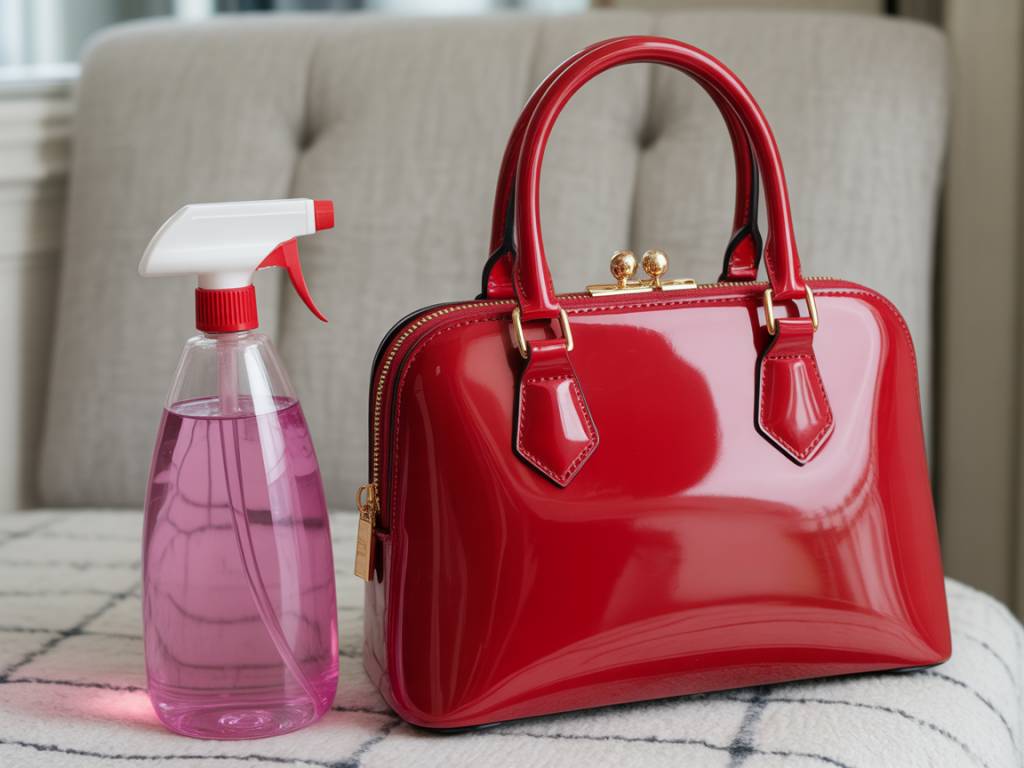
If you’ve ever bought a patent leather bag thinking, “This is low-maintenance, it just wipes clean,” only to end up staring at cloudy, streaky plastic sadness… welcome. You’re among friends.
I’ve been there. I had a black patent tote that started out looking like something a movie villain would carry: sleek, reflective, absolutely certain of its own superiority. Six months later, it looked more like a forgotten balloon after a kid’s birthday party. Dull patches, fingerprints, a weird sticky zone on one side. I tried everything, and almost ruined it in the process.
So this isn’t the usual “just wipe it with a damp cloth” kind of advice. This is the “I experimented on my own bag so you don’t have to” field report. Let’s talk about how to clean a patent leather bag without destroying that glassy shine – and which tricks should stay on TikTok where they belong.
What you’re actually dealing with (it’s not just “shiny leather”)
Before we start spraying, scrubbing, and regretting, it helps to understand what patent leather really is.
Underneath, you’ve got leather. On top, you’ve got a plastic-like coating, usually polyurethane or something close. That glossy finish is basically a smooth, sealed surface. Great for resisting water. Terrible for forgiving bad cleaning experiments.
This means two important things:
- Anything too harsh can cloud, dull, or crack the coating.
- Oil-based products can sometimes help… or sometimes leave a greasy film that never truly disappears.
So you’re not cleaning traditional leather; you’re cleaning a shiny plastic skin on top of it. Treat it wrong, and the damage is permanent. No conditioner, no magic balm, no prayer at midnight will bring that shine back once it’s gone.
Things I tried that absolutely did not help (learn from my mistakes)
Let’s get the horror show out of the way.
- Pure alcohol / hand sanitizer – Took off some marks, yes. Also left behind a slightly hazy patch where the gloss looked… bruised. From certain angles, it was as if the shine had been sanded.
- Nail polish remover (even “gentle” one) – I thought, “If it removes nail polish, it can remove color transfer, right?” It removed something. Unfortunately, that “something” was the top shine. Never again.
- Bleach wipes – In theory: quick disinfect and clean. In reality: micro-dulling. You don’t see it immediately, but keep doing it and your bag starts to look tired.
- Rough sponges / scrub pads – They don’t always scratch visibly, but they create tiny abrasions that catch light wrong. Patent leather needs smooth, not “lightly sanded.”
- Too much oil – I tried slathering on petroleum jelly one night like it was a face mask. The bag looked glossy at first… then became a fingerprint magnet, collected dust, and took several rounds to de-grease.
So: if it looks like something you’d use to strip paint, whiten your bathroom, or remove nail polish, it probably doesn’t belong anywhere near your patent bag.
The routine that actually works (and doesn’t kill the shine)
Here’s the simple system I finally landed on after my little science experiment phase. It keeps the bag clean and shiny without gambling with its soul.
Step one: The lazy-but-essential dust-off
Dust is boring. Until you ignore it for months and wonder why your bag looks cloudy.
For regular upkeep, you just need:
- A soft, clean microfiber cloth – Not your last car-wash rag. Not something that’s been tumbling with lint in the dryer for three weeks.
- A tiny bit of lukewarm water – Barely damp, not wet.
Do this:
- Wipe the bag gently to remove surface dust, fingerprints, and vague “life residue.”
- Avoid soaking seams or stitching – remember, the inside is still leather.
Half the “dullness” people panic about is actually just layered dust and smudges. Start here first, before jumping to chemical warfare.
Step two: Mild soap, if things look slightly tragic
If water alone doesn’t cut it, you can bring in the delicate backup: mild soap.
You’ll need:
- A tiny drop of gentle soap – Think baby shampoo or a mild, fragrance-free hand soap.
- Water + microfiber cloth – Yes, clean again. Not the one you used to wipe your laptop screen last year.
How to do it:
- Mix a small drop of soap into a bowl of lukewarm water.
- Dampen the cloth in the solution and wring it out well. You don’t want drips.
- Wipe the patent leather in smooth, light strokes. No aggressive scrubbing.
- Immediately follow with another cloth slightly damp with clean water to remove soap residue.
- Dry gently with a dry microfiber.
Done right, this won’t mess with the shine. It just removes grime without stripping anything important.
Step three: The shine booster (used sparingly)
Here’s where things get interesting. After cleaning, sometimes the bag looks… okay. Not spectacular. If you want that mirror-like finish back, you can use a very light layer of one of the following:
- Specialized patent leather cleaner/conditioner – The safest option, if you pick a reputable brand. Always test in a tiny hidden spot.
- Petroleum jelly (Vaseline), used correctly – The Internet’s favorite chaotic suggestion.
Let’s talk about the petroleum jelly, because I know you’re curious.
What worked for me:
- Take the smallest amount possible – think “lip balm on a cold day,” not “greasing a baking tray.”
- Apply it to a clean microfiber cloth, not directly on the bag.
- Buff gently over the patent leather in circular motions.
- Immediately go over it with a fresh, dry cloth to remove any excess.
If you can see a layer of product sitting on the bag, you’ve used too much. The goal is not to coat it; it’s to lightly polish the surface.
Used like this, it can revive a slightly tired shine and soften the look of micro-scuffs. Used as a night cream? You’ll be wiping it off for a week.
How to deal with the big villains: scuffs, stains, and color transfer
Now for the part where most disasters happen. Not all marks are created equal, and not all of them should be fought head-on.
Scuff marks that look like they’re on the surface
These are the harmless kind – the little gray or whitish streaks you get from friction, like your bag rubbing against a chair, a shoe, or another bag.
To handle those, I’ve had luck with:
- First, the soap and water method from above.
- If they’re still there, a tiny amount of petroleum jelly or a patent leather cleaner on a cloth, gently buffed.
Often, these are just superficial marks sitting on the coating, not in it. Be patient, not aggressive. If it doesn’t lift with light pressure, stop before you polish the shine right off.
Color transfer from jeans or dark clothes
Ah, the blue shadow on your pale patent bag. A modern tragedy.
Here’s the uncomfortable truth: once dye has migrated into or under the coating, you may not be able to remove it at home without causing more visible damage than the stain itself.
Things that did not work well for me:
- Alcohol-based products – sometimes faded the stain slightly, always dulled the shine.
- Magic erasers – great on walls, suspicious on patent leather. They have a micro-abrasive effect. The shine will pay the price.
Your best bet:
- Catch it early – regular wiping helps prevent dye from settling.
- Use a specialized patent leather cleaner and test it in an inconspicuous spot.
- If the bag is expensive or sentimental, talk to a professional leather care service before going full DIY chemist.
Sometimes the most responsible move is to stop trying to erase it and treat it as a feature. A little ghost of blue on cream patent has a certain personality, if you squint.
What to do if your patent leather feels sticky
One day you grab your bag and realize it doesn’t feel smooth anymore. It’s… tacky. Slightly sticky to the touch. This is usually a sign that the coating is breaking down or reacting to heat, humidity, or products you’ve put on it.
You can try:
- Wiping with a damp cloth and mild soap to remove any residue.
- Rinsing off the soap with a barely damp cloth and drying thoroughly.
- Storing the bag in a cool, dry place for a while – not in plastic, not pressed against other bags.
If the stickiness remains, it’s rarely something you can “fix” permanently at home. Often it’s deterioration, not dirt. Anything strong enough to “de-stick” it will probably damage the finish. That’s the point where I personally step back and accept that sometimes, the bag has aged out of its glossy era.
What absolutely should not touch your patent leather bag
Let’s make this easy. Keep these far, far away:
- Nail polish remover (acetone or non-acetone)
- Pure alcohol, aggressive disinfectants, or strong cleaning sprays
- Bleach, whitening agents, or bathroom cleaners
- Scrub brushes, rough sponges, or anything with grit
- Leather conditioner meant for regular leather – It can leave a film and isn’t designed for the plastic coating.
- Colored creams or polishes – Patent isn’t porous the way normal leather is; these usually just smear and stain.
If you wouldn’t use it on a glossy phone screen or a pair of glasses, think twice before using it on patent leather.
How to store it so you don’t undo all your hard work
Cleaning is only half the story. Storage quietly destroys as many bags as bad cleaning habits.
To keep your patent leather bag from turning into a dull, warped relic in the closet:
- Keep it away from heat and sunlight – Direct sun can discolor and warp the coating. A summer-window shelf is basically a slow roast.
- Don’t store it touching other bags – Especially other patent or dark leather. Color can transfer over time, and the glossy surfaces can stick together.
- Use a breathable dust bag – Cotton is good. Plastic is a trap for moisture and temperature changes.
- Stuff it lightly – Tissue paper or clean fabric inside helps it keep its shape. No overstuffing unless you like lumpy silhouettes.
Storage is boring maintenance, but it’s the difference between “vintage treasure” and “mysterious sticky object at the back of the closet.”
When it’s worth going pro (and when it’s not)
There’s a point where home remedies become home sabotage. If your bag is:
- Designer-level expensive,
- Heirloom or sentimental, or
- Already showing serious damage (deep cracks, major color transfer, peeling coating),
then having a professional leather care service look at it is not overkill. It’s damage control.
They can’t perform miracles on every patent leather corpse, but they usually have access to gentler products and tools than whatever’s lurking under your kitchen sink. At the very least, they can tell you what not to try.
On the other hand, if it’s a mid-range high-street bag you’ve dragged to bars, trains, festivals, and three different jobs… maybe give yourself permission to accept a few scars. Clean it, care for it, and let a little imperfection tell the story.
The method in one glance (for future you who will forget all this)
Here’s the practical cheat sheet you can mentally pin:
- For everyday grime: Wipe with a soft, barely damp microfiber cloth. Dry immediately.
- For light dirt or smudges: Mild soap + water on a damp cloth, then wipe with clean water, then dry.
- For boosting shine: A tiny bit of patent leather cleaner or petroleum jelly on a cloth, gently buffed, then wiped with a dry cloth.
- For scuffs: Try cleaning first; if needed, use a hint of shine product and gentle buffing. If it resists, don’t force it.
- For color transfer: Gentle attempts only, ideally with a proper patent leather cleaner. If it won’t budge, consider living with it or seeing a professional.
- For storage: Cool, dry, not pressed against others, in a breathable dust bag.
Patent leather looks indestructible, but it’s more like glass: gorgeous, dramatic, and unforgiving if you go at it with the wrong tools. Treat it gently, keep the experimental chemistry to a minimum, and that mirror-like shine will stick around a lot longer than your current fashion phase.